MATERIAL SELECTION
Cabinet materials
& hardware.
Explore cabinet materials and hardware—from the board inside and the door finish to edge banding, hinges, drawer runners and pull-out storage. Match each choice to the design and use of your cabinetry.
DOOR & DRAWER HARDWARE
BOARDS · SURFACES · METAL HARDWARE · STORAGE
Four parts of a complete cabinet.
01 / INSIDE THE CABINET
Cabinet boards
& panel cores.
Boards form the cabinet body, shelves and door substrates. Compare the five supplied cross-sections, then specify the exact grade and thickness.
PANEL STRUCTURE
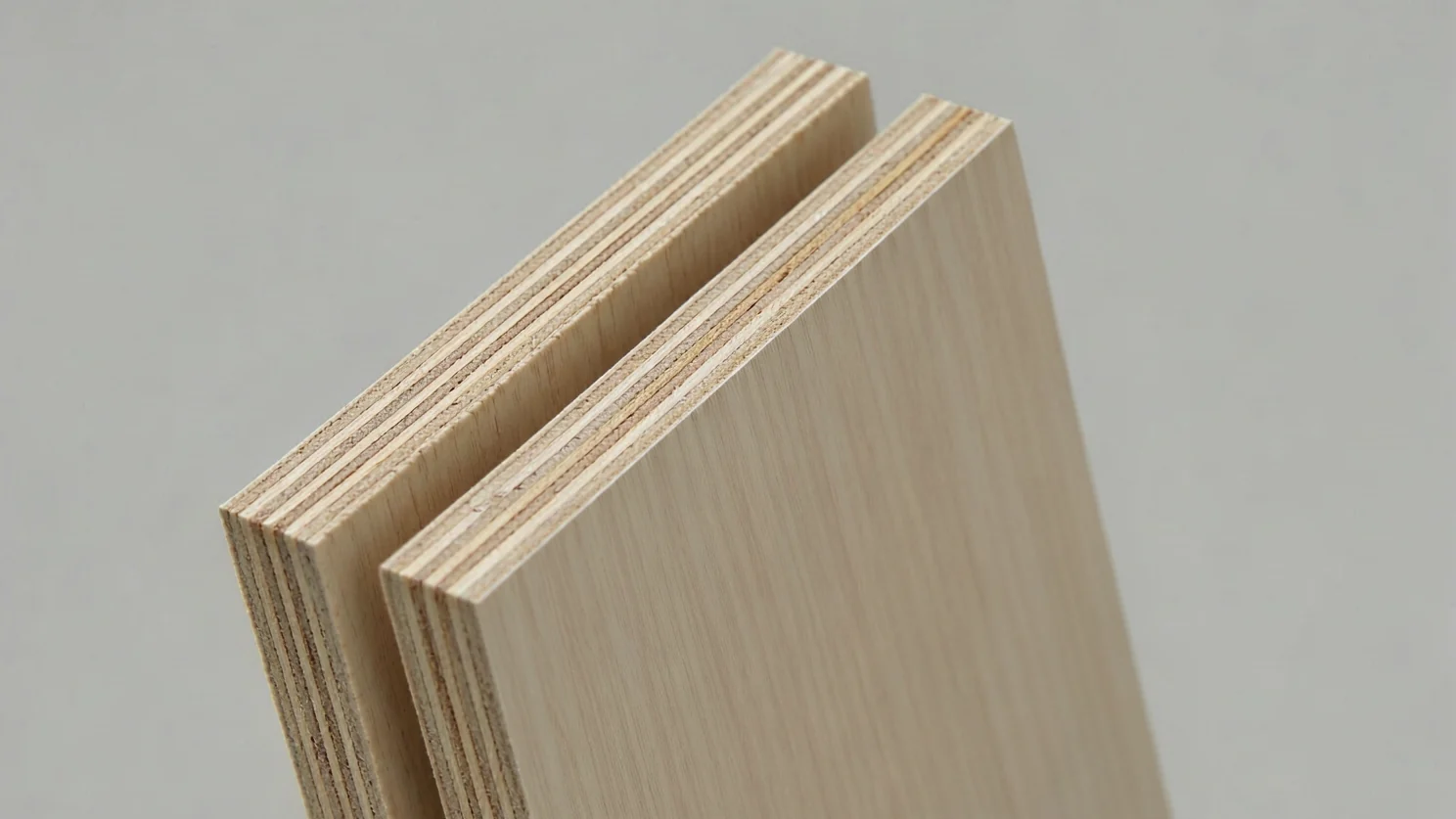
Multilayer plywood
Layers of wood veneer bonded together. The stacked layers are visible along the cut edge.
- Where it is used
- Cabinet sides, shelves and partitions, subject to the selected panel specification.
- What to specify
- Panel manufacturer, grade, thickness and face finish.
- Supporting documents
- Match the report to the selected panel manufacturer and model.
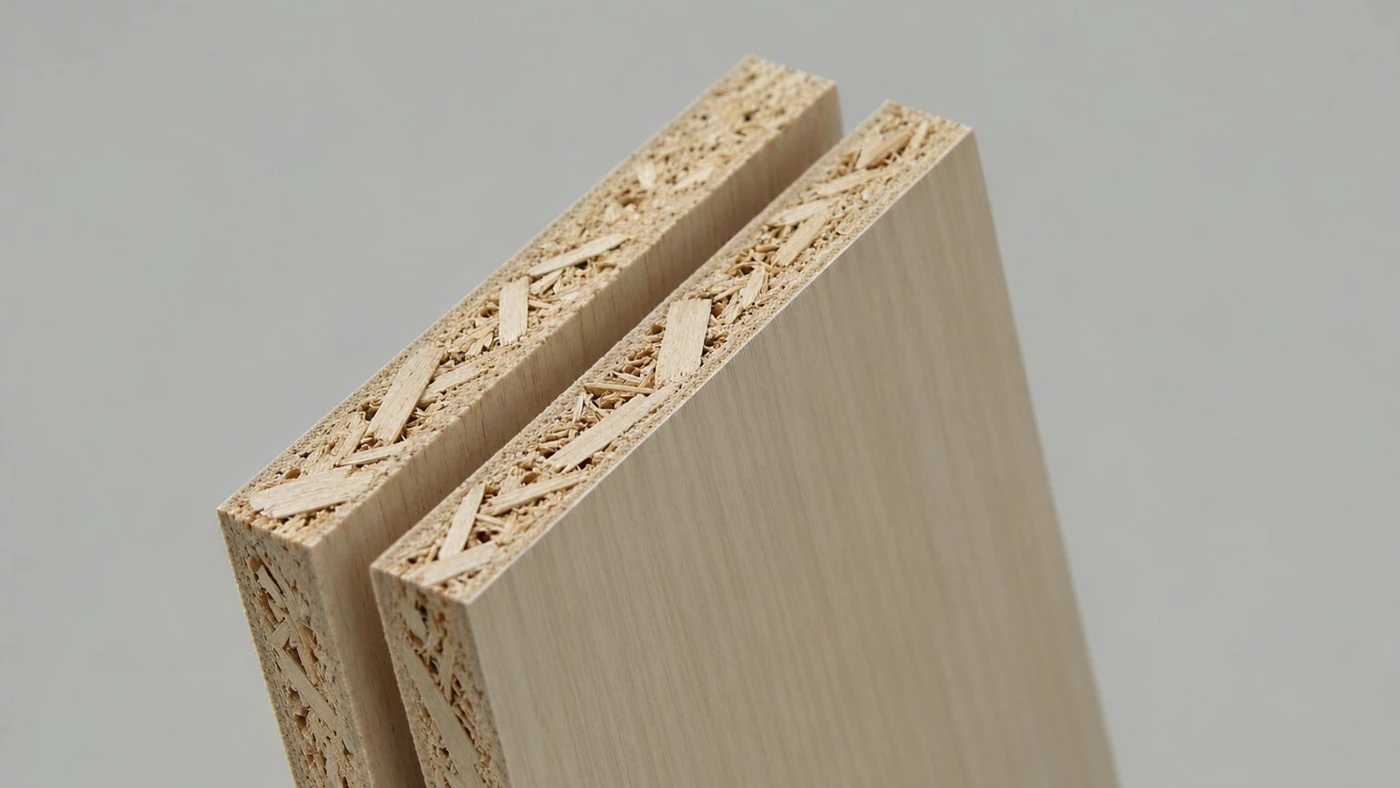
PANEL STRUCTURE
Particleboard
A panel made from bonded wood particles, shown here at the cut edge. The surface finish is selected separately.
- Where it is used
- Cabinet bodies, shelves and storage components, subject to the selected grade.
- What to specify
- Panel model, thickness, surface finish and edge banding.
- Supporting documents
- Match the report to the selected panel manufacturer and model.
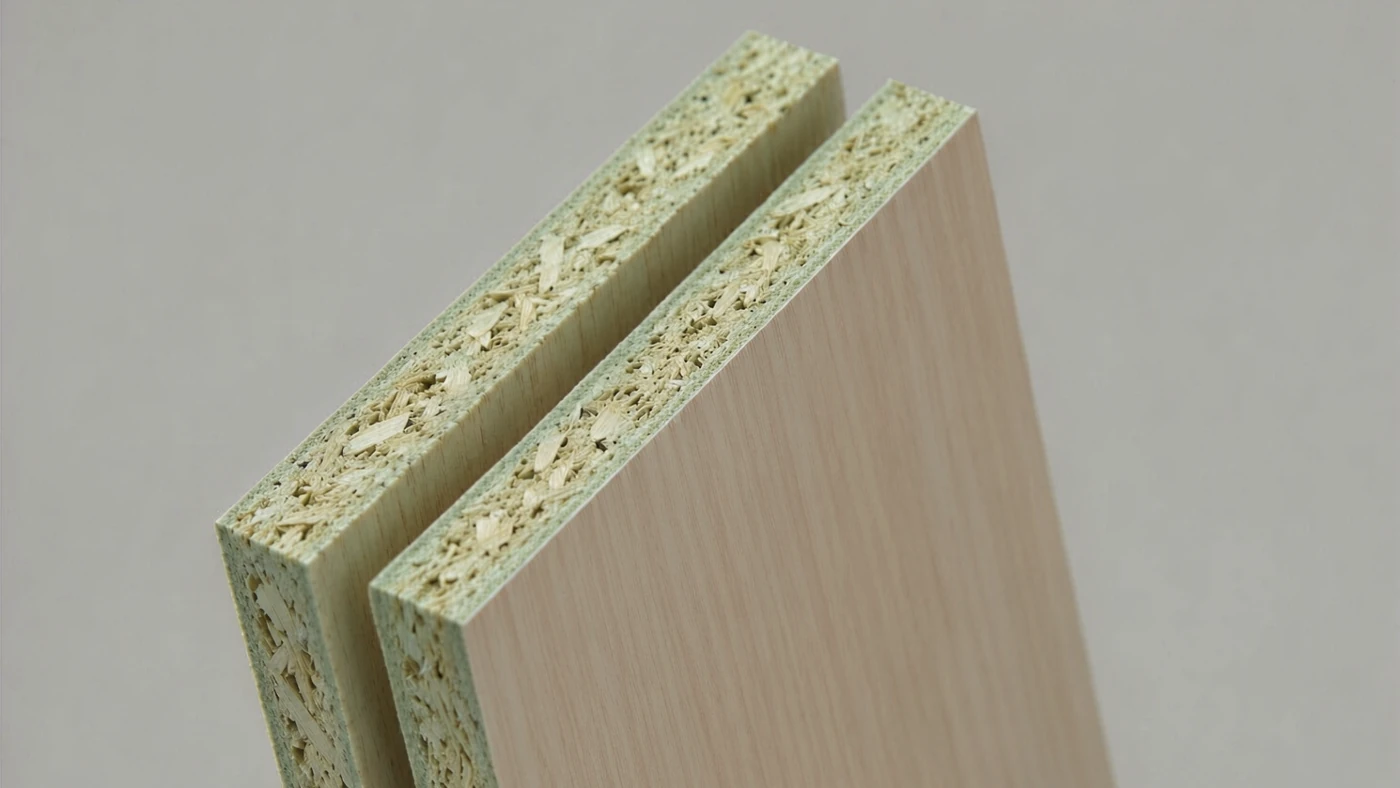
PANEL STRUCTURE
Moisture-resistant particleboard
A moisture-resistant particleboard sample. This is a board category, not a guarantee that the finished cabinet is waterproof.
- Where it is used
- Cabinet components where the room conditions call for a reviewed moisture-resistant specification.
- What to specify
- Panel grade, intended use, sealed edges and supporting test information.
- Supporting documents
- Match the report to the selected panel manufacturer and model.
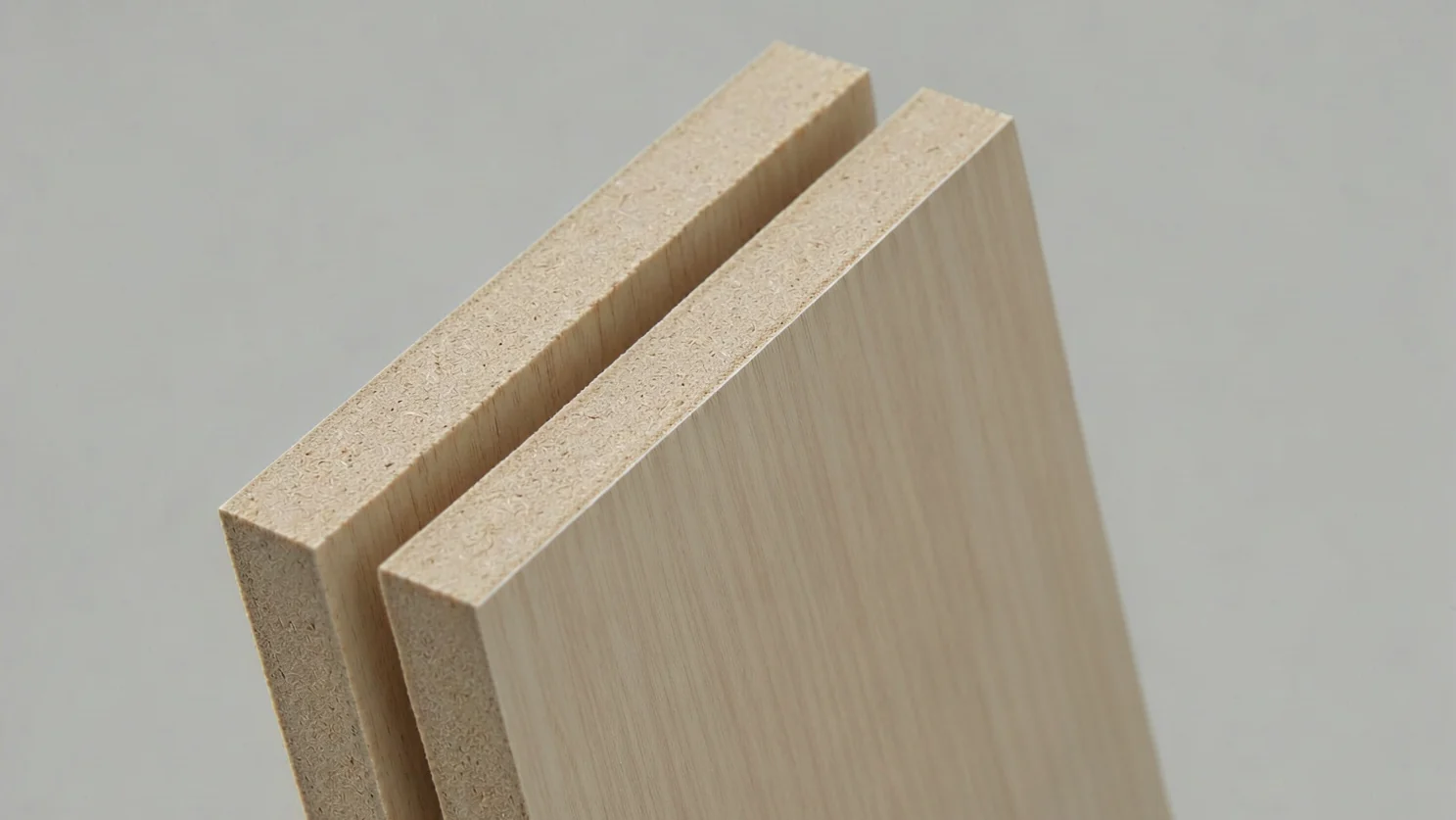
PANEL STRUCTURE
MDF
Medium-density fibreboard: a panel made from bonded wood fibres, with a fine-textured core.
- Where it is used
- Door substrates and shaped components, where the selected grade and machining suit the design.
- What to specify
- Panel grade, thickness, door profile and surface treatment.
- Supporting documents
- Match the report to the selected panel manufacturer and model.
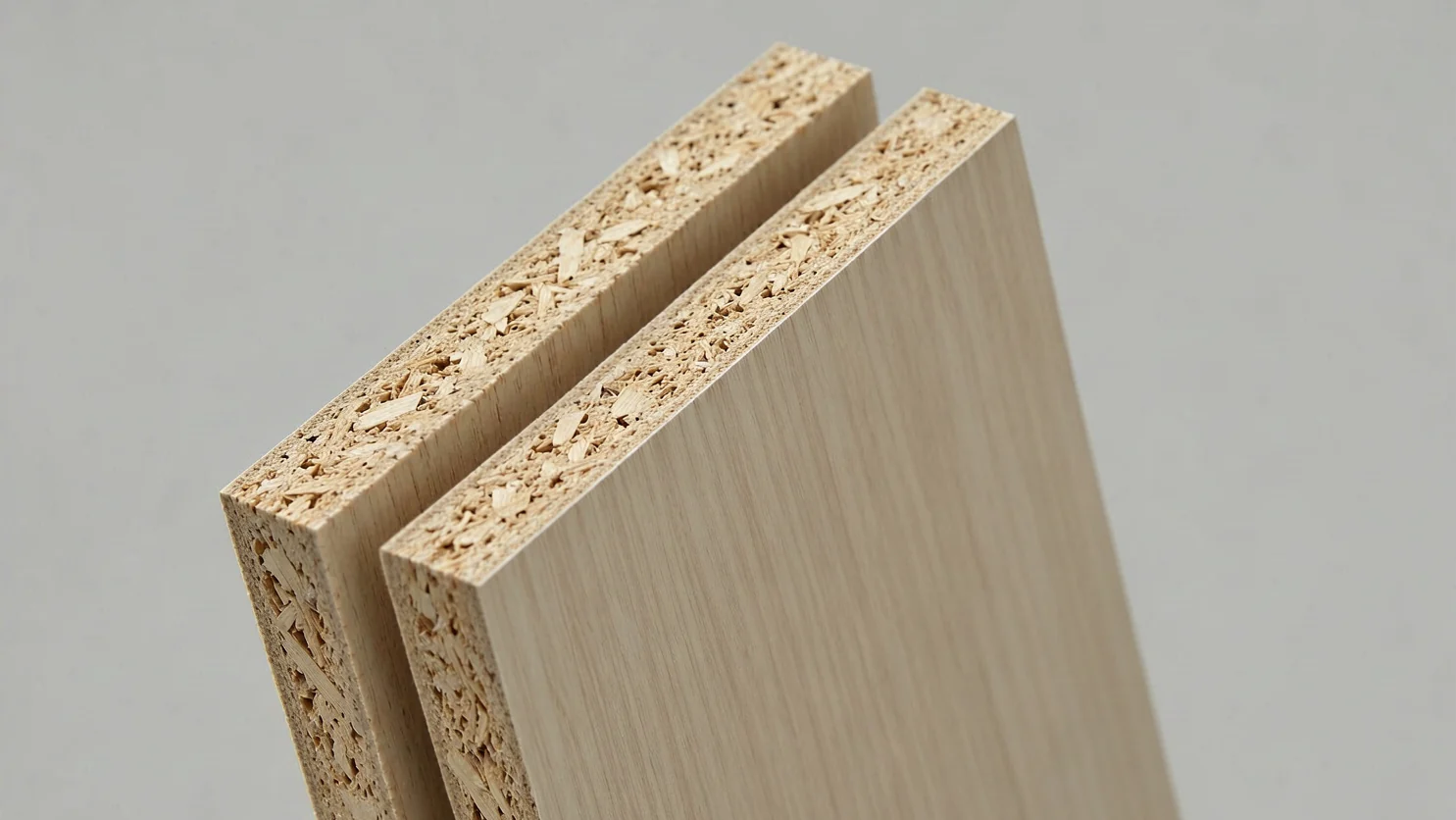
PANEL STRUCTURE
OSB
Oriented strand board: a panel made from layers of wood strands, visible in the supplied cross-section.
- Where it is used
- Project-specific panel applications; confirm its role before including it in a cabinet order.
- What to specify
- Panel model, surface, thickness and suitability for the proposed component.
- Supporting documents
- Match the report to the selected panel manufacturer and model.
Panel names describe the core, not a guaranteed emission class or finished-cabinet performance. Confirm the exact panel and its intended application.
The report should match the material.
Check the manufacturer, model, test scope and issue date—not only the certificate logo.
02 / THE VISIBLE DIFFERENCE
Door fronts, surfaces
& edge banding.
The board is the core. The finish is what you see and touch. Edge banding covers the exposed cut edge—these are separate choices in your specification.
Door front
The visible cabinet door or drawer face. Agree the base material, profile and dimensions.
Surface finish
The outer colour and texture. Approve a physical sample, reference code and gloss level.
Edge banding
The strip covering a panel’s cut edge. Match its material, colour and corner detail to the chosen board.
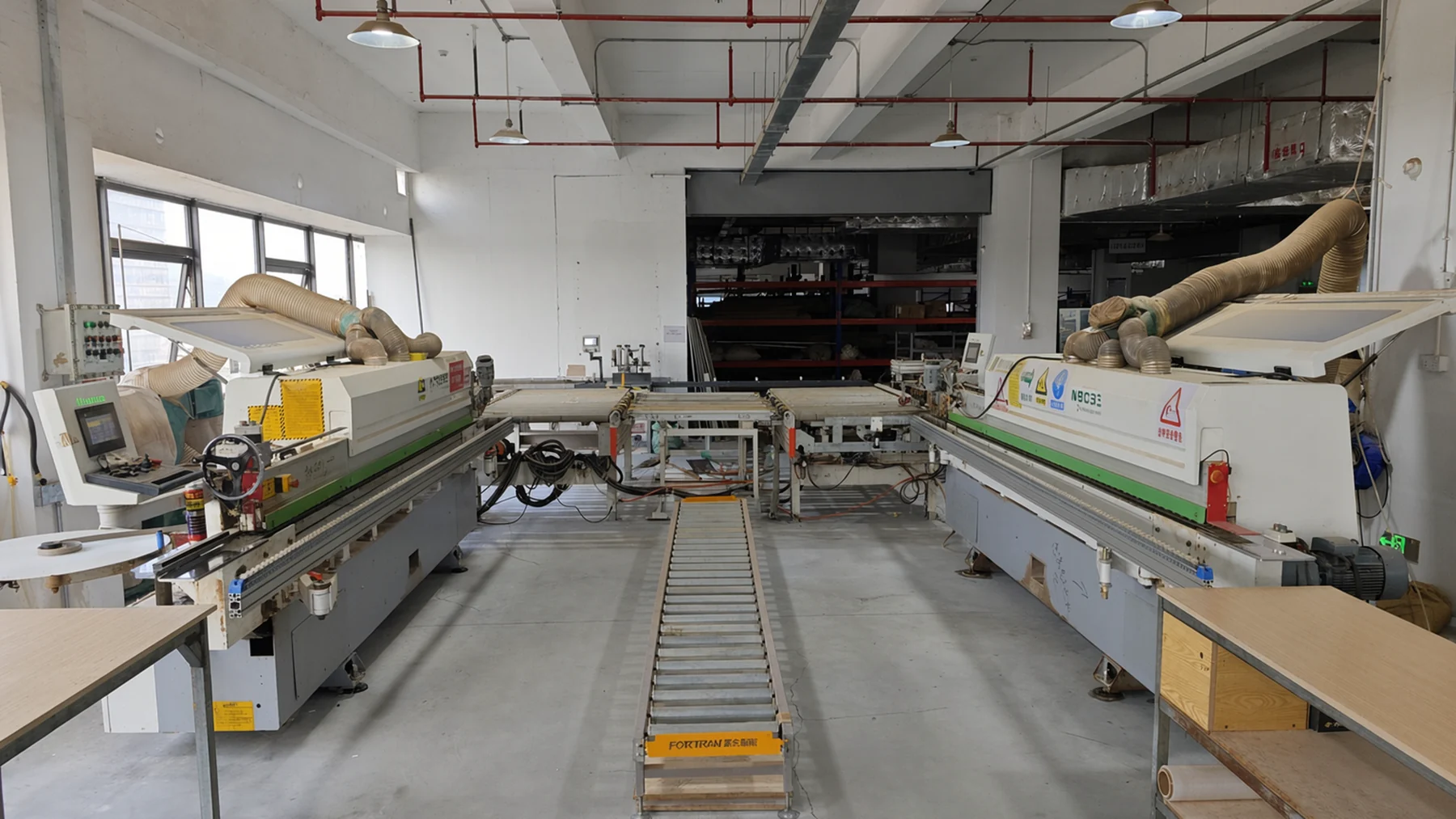
Company factory image.
Request a close-up of your selected edge detail.
More finish references are available in the complete catalogue.
03 / METAL HARDWARE
Hinges, runners
& drawer systems.
Hinges move doors. Runners move drawers. Drawer systems organise the space inside. Choose the function first, then the brand and exact model.
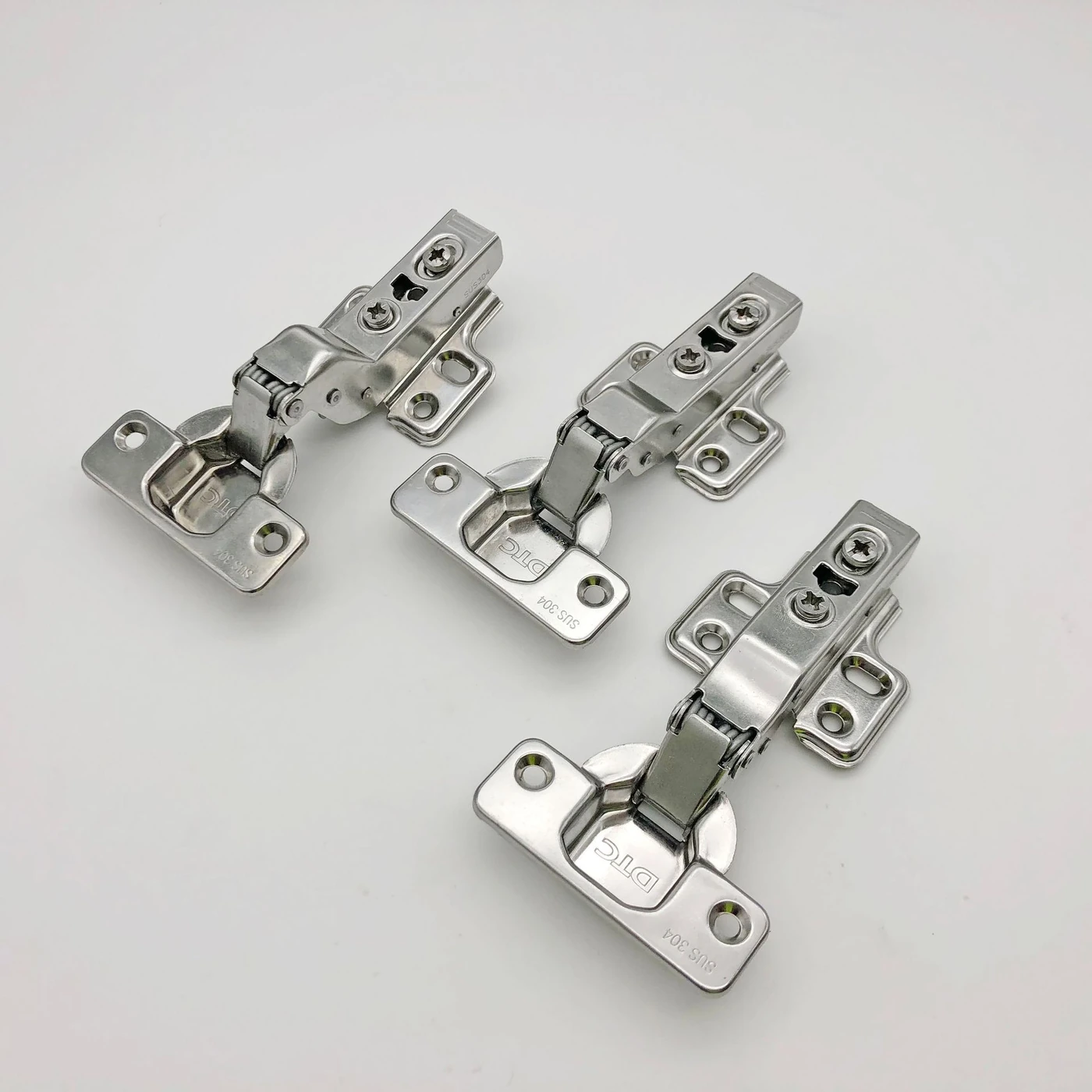
DTC · DOOR HARDWARE
Concealed door hinges
Connect the door to the cabinet body and control how it swings open.
- Used in
- Kitchen, wardrobe and vanity doors.
- Select by
- Door overlay or inset, opening angle and closing action.
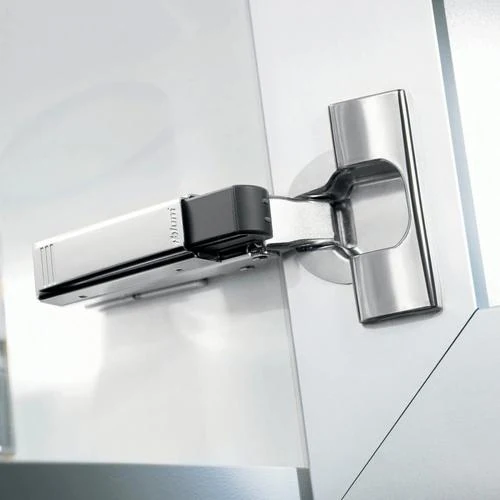
BLUM · DOOR HARDWARE
Cabinet door hinges
An alternative hinge reference for discussing your door configuration.
- Used in
- Cabinet doors matched to their frame and panel construction.
- Select by
- Hinge model, mounting plate, door thickness and opening clearance.
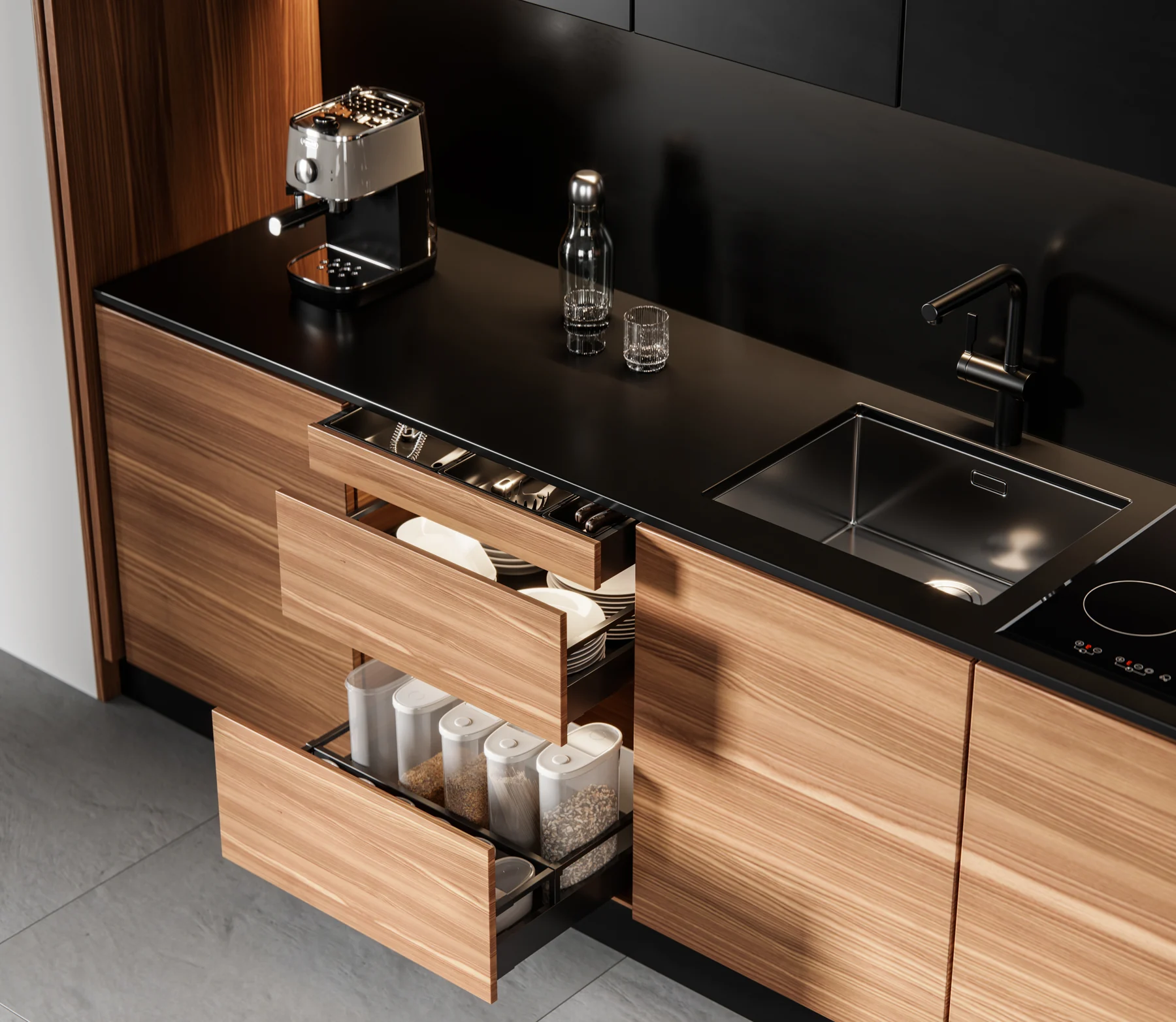
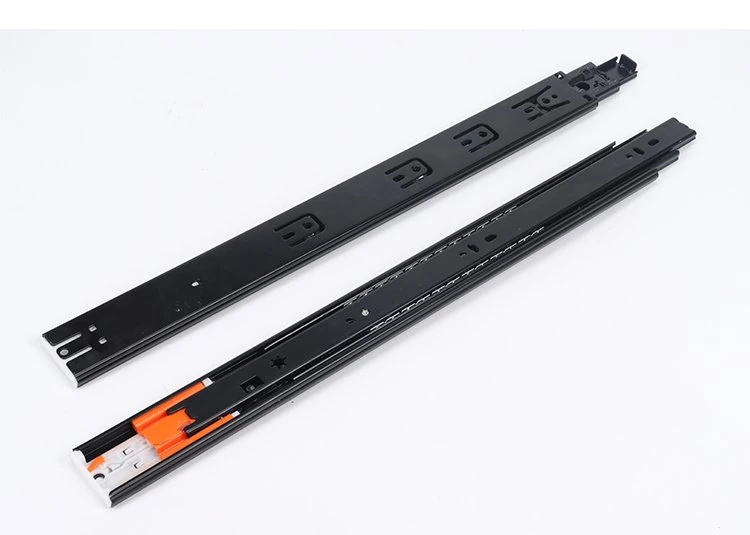
DTC · DRAWER HARDWARE
Drawer runners
The sliding mechanism that guides a drawer in and out of the cabinet.
- Used in
- Cabinet drawers and internal pull-outs.
- Select by
- Runner length, mounting type, extension and closing action.
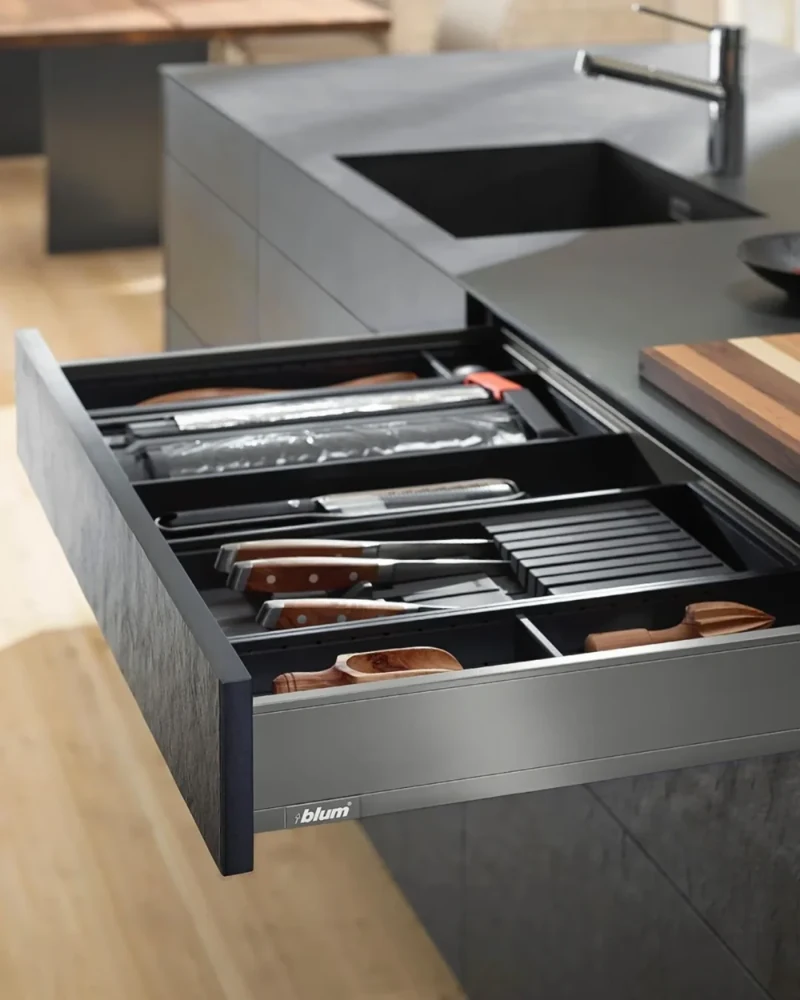
BLUM · DRAWER SYSTEMS
Drawer boxes
The drawer sides and fitted storage space, coordinated with a runner system.
- Used in
- Kitchen utensils, vanity storage and internal organisation.
- Select by
- Drawer height, cabinet width, runner model and internal dividers.
Brand references shown in the supplied accessory collection. Final brand, model, closing mechanism and rated capacity are confirmed for each quotation; not every pictured fitting is a standard inclusion.
04 / STORAGE ACCESSORIES
Storage that fits
the way you use it.
Choose an accessory around what you store and the cabinet it must fit—not from the photo alone. Share the internal dimensions with your enquiry.
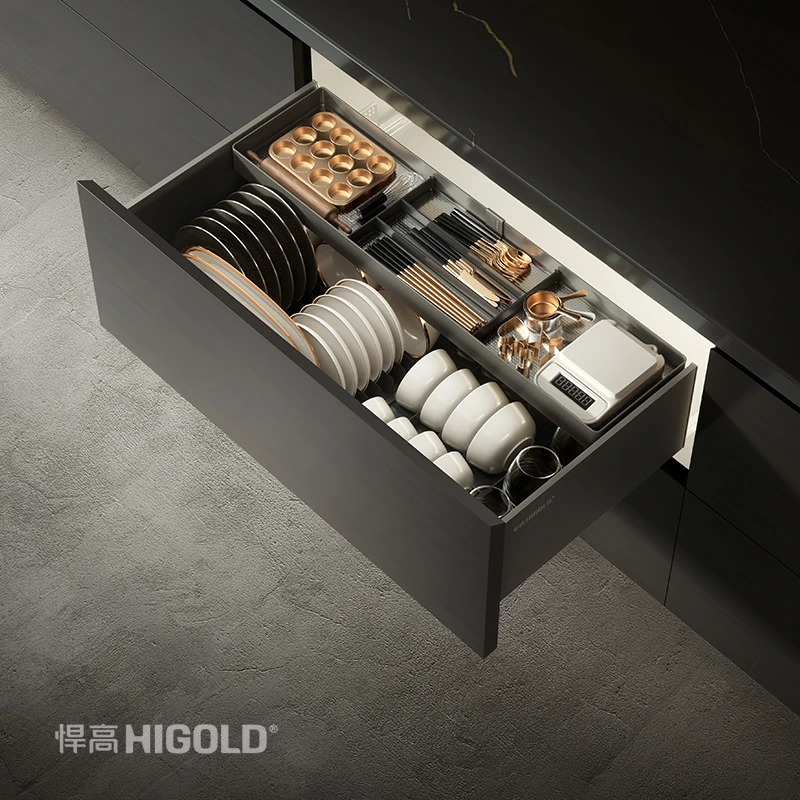
HIGOLD · KITCHEN STORAGE
Dish & cutlery pull-outs
Pull-out baskets bring dishes, utensils and smaller kitchen items out of the base cabinet.
- Used in
- Kitchen base cabinets.
- Select by
- Internal cabinet width, basket layout, mounting and opening clearance.
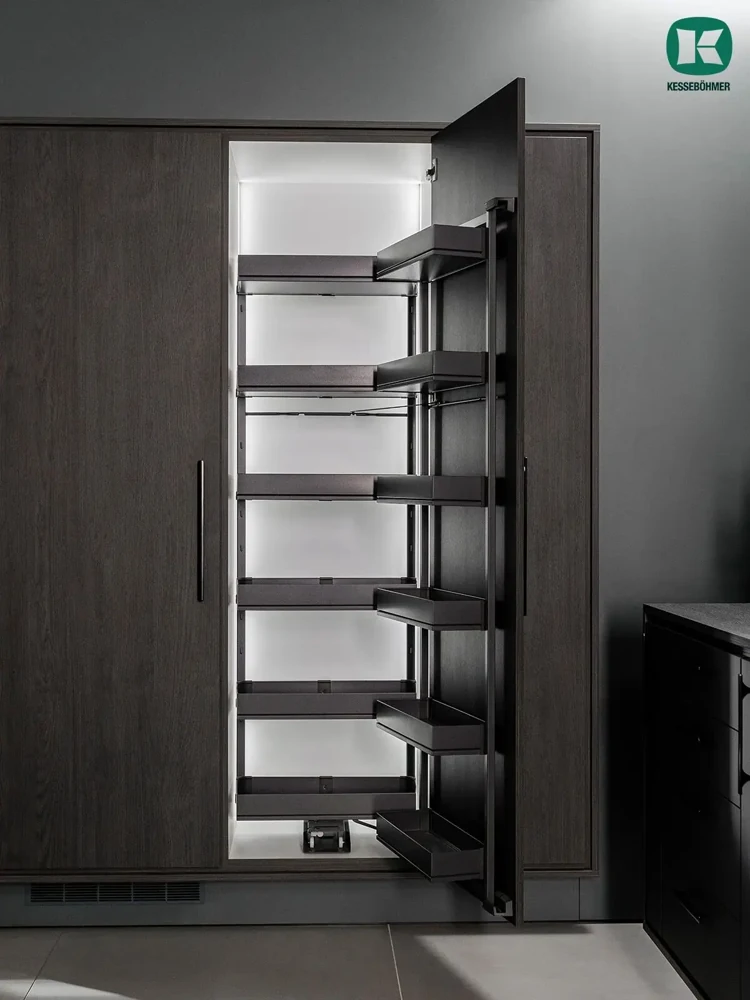
KESSEBÖHMER · PANTRY STORAGE
Tall pantry pull-outs
A tall-cabinet storage fitting for organising pantry goods on accessible shelves.
- Used in
- Tall kitchen pantry cabinets.
- Select by
- Cabinet opening, usable height and depth, shelf arrangement and rated capacity.
PUT THE CHOICES TOGETHER
From a material preference
to a clear cabinet specification.
Tell us the cabinetry type, intended use and destination. Discuss panel, finish and hardware choices together before requesting a quotation.
- Cabinet / panel model
- Finish & hardware configuration
- Destination
- Required documents
BEFORE YOU SPECIFY
Material questions,
answered clearly.
Which panel should I choose for kitchen cabinets?
Start with the cabinet construction, finish, expected use and budget. Ask for the selected panel model, thickness and relevant documentation rather than choosing from a core name alone.
Does moisture-resistant mean waterproof?
A moisture-resistant panel name does not establish a waterproof finished cabinet. Review the selected panel data, edge treatment, joints and installation conditions for the intended use.
Can I confirm colours from the website?
Use images to establish a direction, then approve a physical sample and its reference code. Lighting and screens affect the colour you see online.
Where can I find material test reports?
Use the documentation page to request reports for the panel, finish or component you are specifying. Company management certificates do not replace material-specific reports.